Emission Reduction Plan

How we support companies in their emission reduction plan

At the Asociación Huella de Carbono (AHC) we try to take greenhouse gas inventories one step further to help entities.

We therefore translate the data into concrete, graded and verifiable actions, drawing on international best practices and a library of our own measures, and accessing the best available public repositories.

The result is a Reduction Roadmap aligned with the company's objectives and revisable throughout the project.
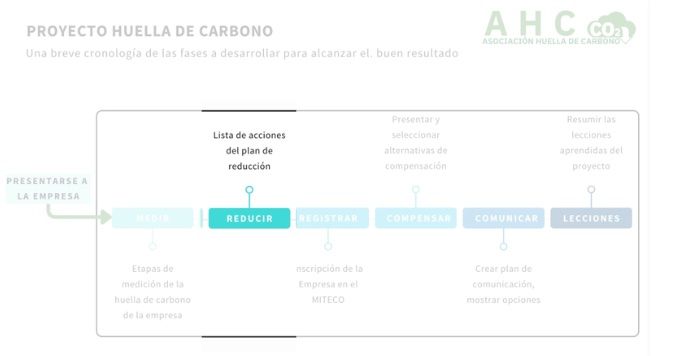
carbon footprint reduction project support carbon footprint reduction association

1. Methodology in 5 Phases (not exhaustive)

Phase What we do Available tools and standards / general public reference
1. Diagnosis and "hot-spots". Once the measurement is completed, we analyze the inventory of Scopes 1+2 , 3 and detect the most carbon-intensive hot-spots. GHG Protocol + ISO/TR 14069 (sectoral practical guide) iso.org
2. Mapping with our Action Library We compare each focus with a catalog of measures classified by speed of implementation, required investment and % reduction. AHC Library (internal) + tables of external solutions such as solarimpulse.com and Project Drawdown drawdown.org
3. Prioritization & Roadmap objective 2030. We apply criteria of impact, cost, technological maturity and eco-benefits and create three levels of engagement:
- Essential (quick wins)
- Advanced (medium investments)
- Transformational (R&D and value chain).
MACC-curve, SBTi's Net-Zero Standard v2 to set 2030/2050 milestones sciencebasedtargets.org
4. Implementation and verification Each action is documented as a "Project": with its objectives, baseline, indicators, follow-up plan and responsible party. ISO 14064-2 (projects), validation/ verification ISO 14064-3 iso.org
5. Continuous monitoring Annual footprintrecalculation; integration with MITECO Registry. Annual MITECO Report for sectoral analysis + CSRD (Directive 2022/2464) epa.gov

2. Types of available measures (some examples)

Category Examples of recommended actions Sources of good practices used (not exhaustive)
Energy Efficiency Proprietary library: LED lighting, HVAC intelligent management, ISO 50001 monitoring EPA GPM, Drawdown #15 "LED Lighting". epa.govdrawdown.org
Renewable Electricity On-site / off-site solar PPA, I-REC / GdO certificates GHG Protocol Scope 2 Guide ghgprotocol.org
Renewable thermal & process heat Aerothermics, certified biomass, heat recovery Project Drawdown "Industrial Heat Pumps drawdown.org
Mobility and logistics EV fleet, commuting plan, eco-route design SBTi Transport Guidance
Other Circularity & Waste measures Packaging redesign, composting, circular purchasing Drawdown "Recycled Metals", "Reduced Food Waste". drawdown.org
Value Chain (Scope 3) Supplier program, eco-purchasing criteria, VCMI Code of Practice for gap Scope 3 VCMI Scope 3 Action Code (2025) reuters.com
Other Captura & removals references Reforestation, biochar, pilot DACs MITECO projects, Large tree planters, UNFCCC CDM / Gold Standard, IGES CDM DB cdm.unfccc.int iges.or.jp .

3. Exploration of external solutions sponsored free of charge

When internal measures are no longer sufficient, we recommend searching for technologies and reference projects in databases supported by multilateral organizations:

  • UNFCCC CDM & Art. 6: +8 000 verified energy, waste, E&R projects cdm.unfccc.int

  • IGES CDM Database: advanced filters by country and technology for replicability analysis iges.or.jp

  • Project Drawdown Library: 90+ solutions with potential drawdown and TRL ranges drawdown.org

  • IEA Net-Zero Tracking (marginal cost benchmark)

  • SBTi Sectoral Decarbonization Approach to set granular targets.

  • Solarimpulse to find catalog solutions solarimpulse.com
  • Other solution databases or catalogs of institutions such as Ihobe's new clean technology listing based on the Dutch MIA EIA VAMIL


4. Guarantees of trust (depending on the entity)

  • Traceability (if used through ISO 14064-2) or other: each action is audited with monitoring plan and estimated % reduction until 2030.

  • Independent review: we collaborate with ENAC/UKAS accredited verifiers when required and especially in Scope 3. Ex: Our Records Quality team reviews all projects prior to submission to MITECO.

  • International benchmarking: we compare success factors with external bases (Drawdown, CDM) and other similar entities to the extent of data availability.

  • Public transparency: option to register the plan and progress in the MITECO Registry and recommendation to communicate it to clients and suppliers.

5. Deliverables received by the company ( depending on the case )

  • Roadmap to 2030 with quantified milestones and MAC curve if necessary (marginal abatement cost).

  • Project sheets (ready for verification).

  • Documents ready for MITECO registration.

  • Report / presentation for the entity.

The United Nations Act Now program is one of the most important and global sources of inspiration and cooperation in the search for solutions to improve society's climate performance. visit it by clicking on the image.

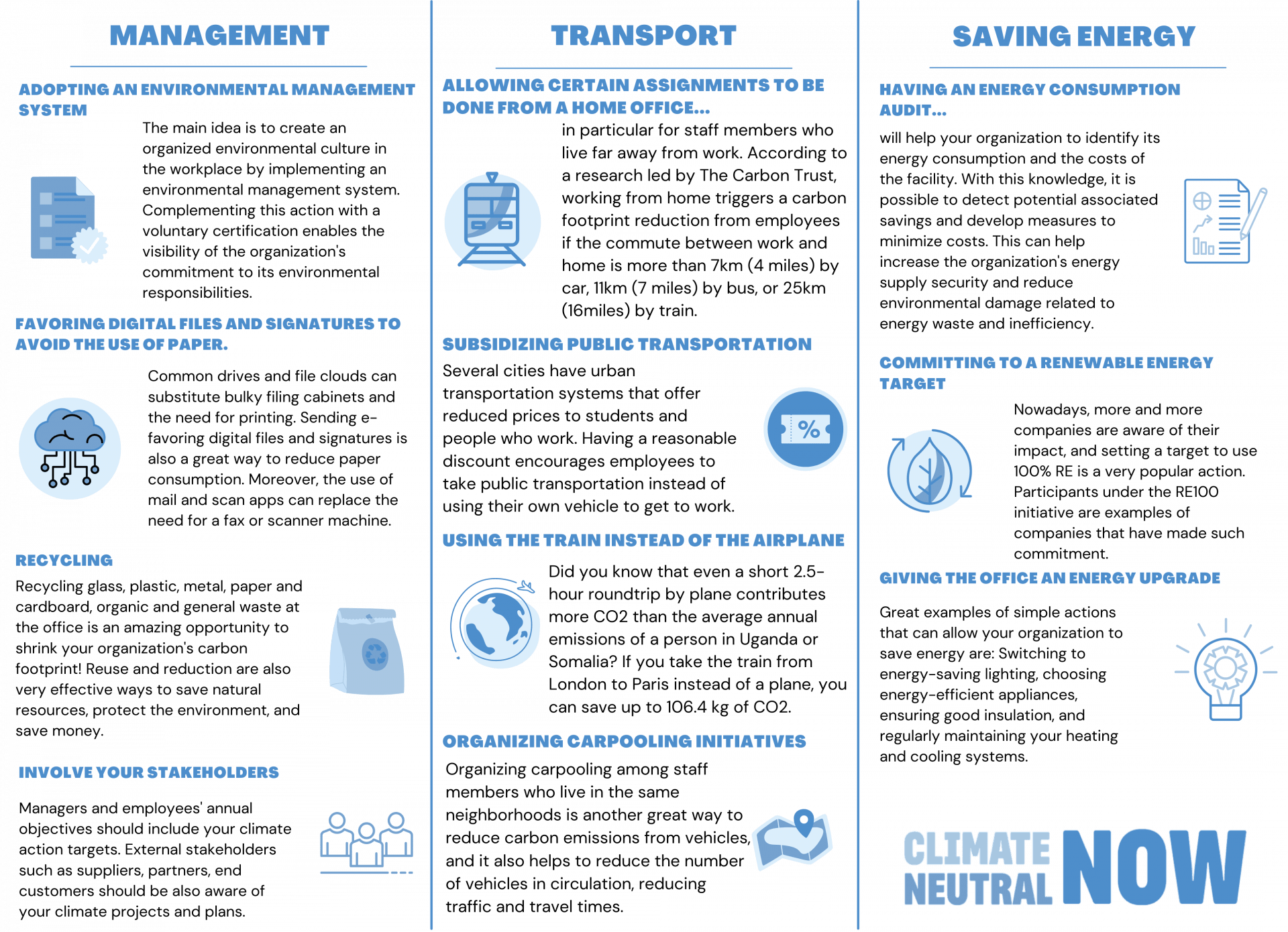
recommendations UN carbon footprint reduction